Most people hear methamphetamine without ever asking what the substance actually is on a molecular level. The meth chemical formula tells a story that goes beyond chemistry class. It explains why this synthetic drug is so addictive, why methamphetamine withdrawal feels so brutal, and why long-term meth use damages the brain and body so severely. For men ready to step away from methamphetamine addiction, our inpatient rehab program offers structured medical and behavioral health support for breaking the cycle.
This guide walks through the chemistry of methamphetamine in plain terms, what its chemical structure means for the central nervous system, and what real treatment looks like for meth addiction.
What Is the Meth Chemical Formula?
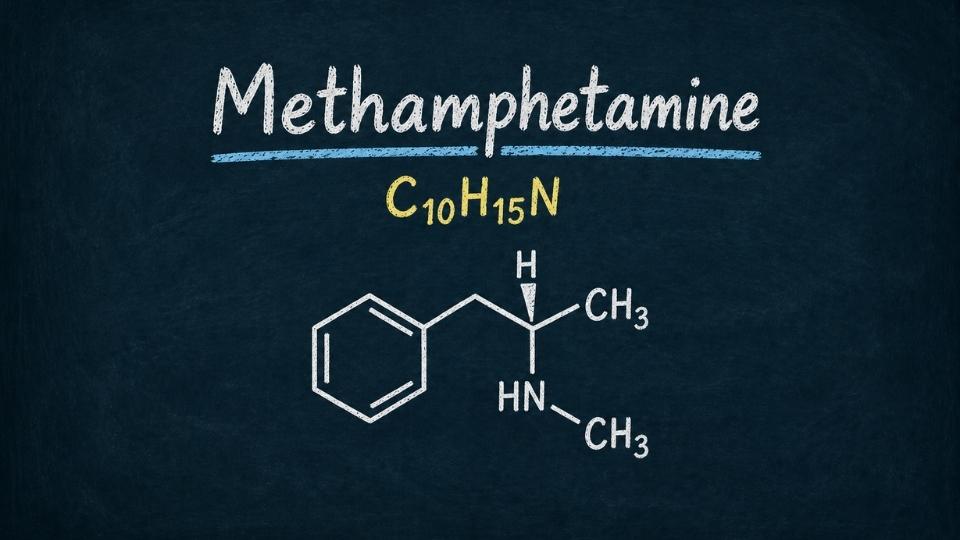
The meth chemical formula is C10H15N. That short string tells chemists methamphetamine is composed of 10 carbon atoms, 15 hydrogen atoms, and one nitrogen atom. Its full International Chemical Identifier is InChI=1S/C10H15N/c1-9(11-2)8-10-6-4-3-5-7-10/h3-7,9,11H,8H2,1-2H3, with stereospecific identifiers used to distinguish its mirror-image forms, a precise digital fingerprint of the molecule.
The international nonproprietary name is methamphetamine. It is a synthetic drug closely related to amphetamine, differing by a single methyl group attached to the nitrogen. That tiny change is dramatic in practice, especially in the central nervous system.
Breaking Down the Chemical Structure of Methamphetamine
The chemical structure of methamphetamine is what makes it so problematic. Its backbone is part of the phenethylamine family, which allows it to interact with monoamine systems involving dopamine and norepinephrine. Several amphetamines share related structures, but methamphetamine’s chemical structure produces an especially powerful effect.
D Methamphetamine and L Methamphetamine
The chemical structure of methamphetamine is a chiral compound with two mirror-image forms. D methamphetamine, also called dextromethamphetamine, drives the high tied to crystal meth and illicit meth. L methamphetamine, also known as levmetamfetamine, is far less potent and shows up in some over-the-counter inhalers as a mild decongestant.
D methamphetamine interacts with dopamine transporters, promoting dopamine release and disrupting normal reuptake, which floods the brain with dopamine signaling. The active ingredient in illicit crystal meth is almost always d methamphetamine. Pharmaceutical methamphetamine hydrochloride for attention deficit hyperactivity disorder (ADHD) is also S-(+)-methamphetamine in carefully measured doses.
The Hydrochloride Salt Form
Both pharmaceutical and most illicit forms exist as methamphetamine hydrochloride, the hydrochloride salt of the freebase compound. The hydrochloride salt is odorless and forms a white crystalline powder that is freely soluble in water, with a melting point between 170 and 175 degrees Celsius (338 to 347 degrees Fahrenheit).
Find Support for Meth Addiction
Mountain Valley Recovery provides structured, compassionate care for people ready to break free from meth addiction and begin rebuilding their lives.
Why Methamphetamine Crosses the Blood-Brain Barrier

The chemical structure of methamphetamine is more lipid-soluble than that of amphetamine. That property allows methamphetamine to cross the blood-brain barrier rapidly. Once across, it is rapidly absorbed into brain tissue and produces a fast, intense rush.
When methamphetamine reaches dopaminergic neurons, it promotes dopamine release while disrupting reuptake. The brain registers the resulting flood as overwhelming reward, which is part of why methamphetamine addiction develops so quickly.
How Methamphetamine Affects the Central Nervous System
Methamphetamine is one of the most potent central nervous system stimulants in circulation. The central nervous system (CNS) responds with a faster heart rate, raised blood pressure, suppressed appetite, intense focus, and euphoria. The drug also alters glutamate signaling, contributing to its longer-lasting cognitive effects.
Methamphetamine produces sympathomimetic effects similar to adrenaline. Pupils dilate, blood vessels constrict, body temperature climbs, and the cardiovascular system goes into overdrive. These central nervous system stimulants have powerful properties in the moment, but the body cannot sustain that activation safely.
The effects of methamphetamine on emotional regulation are pronounced. Dopamine spikes followed by sharp drops leave users flat, anxious, or depressed for days after meth use. For background on stimulant comparisons, see is adderall considered methamphetamine and the difference between amphetamine and methamphetamine.
Crystal Meth vs Methamphetamine Hydrochloride
Crystal meth is the same active ingredient as methamphetamine hydrochloride, in a different physical form. Commonly called crystal meth, this version is the recrystallized hydrochloride salt with a glassy, shard-like appearance. Crystal meth is typically smoked, snorted, or injected, while powdered methamphetamine hydrochloride is more often used through oral administration or snorting.
The chemistry underlying crystal meth is identical to that of other methamphetamine hydrochloride forms. What differs is purity, route of administration, and how rapidly the drug is absorbed. Smoked or injected crystal meth reaches the brain in seconds, while oral administration produces a slower, longer onset. Because the route of administration shapes both the speed of the high and the kind of damage that follows, our comparison of snorting meth vs smoking meth explains the different risk profiles in detail.
What Crystal Meth Looks Like
Crystal meth looks like clear or bluish-white shards of glass or rock candy. The white crystalline powder form is more typical of pharmaceutical-grade methamphetamine hydrochloride. Both crystal meth and white crystalline powder forms share the same chemical fingerprint, which is why mass spectrometry testing identifies them identically.
How Methamphetamine Is Made
Methamphetamine is a synthetic drug produced through several known pathways. Illicit meth production is a major public health concern because of the dangerous solvents, strong acids, and other substances involved. Modern meth production has shifted toward industrial-scale methods that can produce high-purity methamphetamine.
For each pound of meth manufactured, an estimated 5 to 7 pounds of toxic chemical waste are produced.
Common Precursor Chemicals in Meth Production
- Pseudoephedrine and ephedrine, often extracted from cold medicines
- Phenyl-2-propanone (P2P), now a dominant precursor
- Strong acids and volatile solvents are used in chemical reactions
- Toxic reagents like lithium, anhydrous ammonia, and red phosphorus
- Additional toxic metals, acids, and solvents are used in some illicit operations
These precursor chemicals make meth production extremely hazardous. Volatile and toxic chemical compounds pose a high risk of fires, explosions, and chemical burns during illicit meth production.
Methamphetamine Abuse and Tolerance
Methamphetamine sits among the most potent central nervous system stimulants. Compared with other stimulants like cocaine or other drugs in the amphetamine class, methamphetamine produces longer-lasting effects. That difference is part of why methamphetamine addiction can develop quickly. People also frequently combine drug and alcohol use with meth, which compounds the cardiovascular risk.
In the United States, methamphetamine is classified as a Schedule II controlled substance under the Controlled Substances Act, indicating high potential for abuse and limited medical use. Methamphetamine hydrochloride is FDA-approved for attention deficit hyperactivity disorder (ADHD) and short-term obesity treatment, but it is prescribed under strict regulations because of its potential for misuse. Outside those narrow indications, methamphetamine and similar controlled substances are illegal to manufacture, sell, or possess without a prescription.
Methamphetamine abuse can lead to tolerance as the brain adapts to repeated dopamine surges, so people need larger doses to feel the same effect. That pattern fuels deeper drug dependence and intensifies the health risks of continued methamphetamine abuse. Most people who develop methamphetamine addiction did not plan to. Drug abuse with meth typically starts as occasional use and progresses to chronic methamphetamine use over time.
For a closer comparison between meth and another widely abused stimulant, our piece on crack vs meth and how the recovery paths diverge breaks down the two cycles side by side.
Why the Chemistry of Meth Use Matters for Addiction Risk
Meth use can alter brain chemistry quickly, even during early exposure. Dopamine, norepinephrine, and serotonin all spike, and the brain begins adapting to compensate. That adaptation is the foundation of methamphetamine addiction.
Meth use also damages the cells responsible for processing reward. Methamphetamine induced neurotoxicity affects dopaminergic systems over time. People in long-term meth use often describe an inability to feel pleasure without the drug, a hallmark of methamphetamine induced neurotoxicity. Researchers have linked chronic methamphetamine use to higher rates of Parkinson’s disease and other cognitive impairments later in life, although individual risk varies.
For a closer look at how meth use feels in real time, read what does meth feel like.
Health Risks Associated with Methamphetamine Addiction
The health risks of methamphetamine addiction extend well beyond the brain. Chronic methamphetamine use damages the cardiovascular system, immune system, oral health, and skin. The physical effects and psychological effects of long-term meth use often appear together.
Cardiovascular System Effects
Methamphetamine use can cause severe cardiovascular issues, including tachycardia, hypertension, and increased risk of stroke and heart attack. Methamphetamine overdose can produce dangerous arrhythmias, sustained high blood pressure, and severe psychological effects such as agitation and hallucinations. Sustained high blood pressure damages blood vessels throughout the body, and elevated blood pressure during meth use can persist long after the high fades.
Meth Mouth and Oral Health
Meth mouth is one of the most visible signs of long-term methamphetamine abuse. The combination of dry mouth, teeth grinding, poor nutrition, sugary drinks, and poor oral hygiene causes severe tooth decay, gum disease, and tooth loss. Meth mouth tends to progress quickly once it starts, and it is often one of the first warning signs family members notice.
Skin sores from picking are another common outward sign of chronic meth use. Skin sores often become infected and leave scars long after sobriety begins. For more on meth mouth and oral health, read what is meth mouth and whether it can be reversed.
Long-Term Effects of Methamphetamine on the Brain
The long-term effects of methamphetamine on the brain include memory impairment, emotional instability, and reduced impulse control. Chronic methamphetamine use can alter brain structure and function in ways that take months or years of sobriety to partially heal. See how long it takes to rewire your brain from addiction for context on brain recovery.
| Health Domain | Common Effects of Methamphetamine | Reversibility |
|---|---|---|
| Cardiovascular system | Hypertension, tachycardia, arrhythmias | Often improves with sustained sobriety |
| Brain and dopaminergic neurons | Neurotoxicity, memory issues, mood swings | Partial recovery possible over time |
| Oral health | Meth mouth, tooth loss, gum disease | Limited reversal, dental work often required |
| Skin | Skin sores, scarring, infections | Heals with sobriety and care |
| Mental health | Anxiety, paranoia, depression | Improves with treatment and time |
Methamphetamine Withdrawal: What to Expect
Methamphetamine withdrawal is rarely physically dangerous in the way alcohol withdrawal can be, but the withdrawal syndrome is psychologically grueling. The withdrawal syndrome that follows chronic methamphetamine use can persist for weeks. Common withdrawal symptoms include:
- Intense cravings and a strong urge to use again
- Dysphoric mood, depression, and flat affect
- Anxiety and irritability
- Marked hypersomnia followed by disturbed sleep
- Increased appetite and fatigue
- Low motivation and trouble concentrating
These withdrawal symptoms can persist for weeks or months after cessation. Methamphetamine withdrawal often pushes people back toward use, which is why medical supervision during methamphetamine withdrawal is strongly recommended. The crash following heavy methamphetamine use can be severe, often producing depression, exhaustion, and intense cravings to use again. For a more detailed walkthrough of what to expect day by day, our guide on meth withdrawal symptoms and the 72-hour crash covers the full timeline through the 30-day anhedonia window.
For people with co-occurring conditions, the withdrawal syndrome can also unmask underlying mental health issues. Our articles on the most common co-occurring disorders with addiction and dual diagnosis vs co-occurring disorders explain the overlap.
How Mass Spectrometry Identifies Methamphetamine
Mass spectrometry is one of the most reliable lab methods for identifying methamphetamine in biological samples and seized substances. Forensic toxicologists and clinical toxicology labs rely on mass spectrometry to confirm the presence of methamphetamine, its major metabolite (amphetamine), and other minor metabolites that appear after the body’s liver enzyme systems break the drug down.
Urinary excretion is the most common testing route, since methamphetamine and its minor metabolites appear in urine within hours of meth use. The National Institute on Drug Abuse, part of the National Institutes of Health, funds and promotes research on testing and other areas like addiction treatment through its drug supply program.
Treatment Pathways for Meth Addiction
Meth addiction is highly treatable, even when crystal meth has been part of someone’s life for years. Effective programs for overcoming meth addiction combine behavioral therapies, medical supervision, peer support, and structured care that addresses both substance use and mental health.
Behavioral therapies like cognitive behavioral therapy, contingency management, and the Matrix Model show strong outcomes for overcoming meth addiction. Long-term residential support during meth addiction recovery gives the brain time to heal while clients build new coping skills. For men in central Utah, our residential addiction treatment program provides a structured environment for recovery from meth addiction and other forms of drug use.
Recovery from meth addiction is a process, not an event. Resources like stages of addiction recovery, why long-term rehab works, and the relapse prevention model walk through what to expect at each step. Families navigating the impact of meth and other substances may find how addiction affects the family and signs your loved one is addicted helpful.
FAQs About the Meth Chemical Formula and Addiction Risk
Is the meth chemical formula the same as that of amphetamine?
No. Amphetamine is C9H13N, and the meth chemical formula is C10H15N. The two share a similar backbone, but methamphetamine has an extra methyl group that makes it more lipid-soluble and longer-acting in the central nervous system. That single change is part of why methamphetamine produces stronger sympathomimetic effects and a higher addiction risk.
Does the chemical structure of methamphetamine make it more addictive than other stimulants?
The chemical structure of methamphetamine, especially its ability to cross the blood-brain barrier easily, contributes to its high abuse potential. Compared with shorter-acting stimulants, methamphetamine produces a longer, more intense dopamine response, which is part of why methamphetamine addiction develops quickly.
How long do withdrawal symptoms from methamphetamine last?
Acute methamphetamine withdrawal often peaks early and usually improves over the first 1 to 2 weeks. Some psychological effects, especially low mood and intense cravings, can linger for several weeks or months. Medical supervision and behavioral health support during this period significantly improve outcomes.